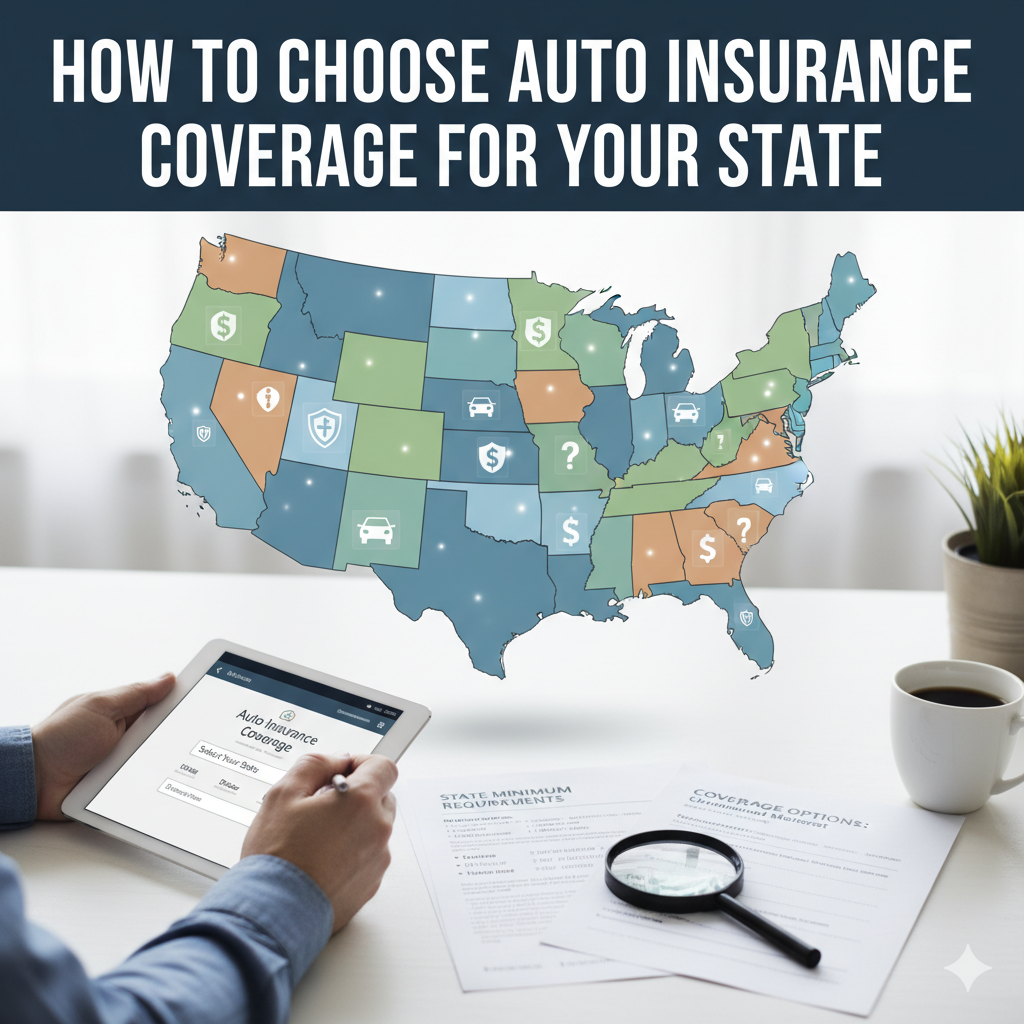

Choosing auto insurance in the United States can be confusing because each state sets its own insurance laws and minimum requirements. What counts as sufficient coverage in Texas may be legally inadequate in California or New York. Choosing the wrong policy can lead to high out-of-pocket costs, legal penalties, or overpaying for coverage you don’t need.
This guide will help you understand your state’s requirements, compare policy types, and select the right coverage to protect both your vehicle and your finances.
Why Auto Insurance Requirements Vary by State
Auto insurance is regulated at the state level, not nationally. Each state determines:
- Minimum liability coverage
- Whether Personal Injury Protection (PIP) is required
- Whether Uninsured Motorist (UM/UIM) coverage is mandatory
- Additional rules in case of accidents or lawsuits
You can look up your state’s official requirements here:
➡️ https://www.usa.gov/car-insurance
Understanding the Main Types of Auto Insurance Coverage
| Coverage Type | What It Covers | Required? |
|---|---|---|
| Liability Insurance | Damage/injury caused to others | Required in most states |
| Collision Coverage | Repairs to your car after an accident | Optional |
| Comprehensive Coverage | Theft, vandalism, weather & fire damage | Optional |
| PIP (Personal Injury Protection) | Medical bills & lost income | Required in no-fault states |
| UM/UIM Coverage | Protects you if another driver is uninsured | Required or optional by state |
| Medical Payments (MedPay) | Medical costs for you & passengers | Optional |
For state-by-state insurance requirement details:
➡️ https://www.autoinsurance.org/state-minimums/
Step 1 — Check Your State’s Minimum Requirements
State minimums are the legal baseline, but they often do not provide enough financial protection.
Example:
If your minimum coverage is $25,000 for bodily injury but medical bills total $80,000, you will personally owe $55,000.
State minimum = legal compliance
Higher limits = financial safety
Recommended Coverage Limits for Most Drivers
Most U.S. drivers benefit from this standard coverage level:
100/300/100 Liability + UM/UIM + Collision + Comprehensive
This provides solid protection in most accident situations.
Step 2 — Evaluate Your Risk & Car Value
Ask yourself:
| Question | Recommendation |
|---|---|
| Do you drive a new or financed car? | Add Collision + Comprehensive |
| Do you live in a high-theft or severe weather area? | Keep Comprehensive |
| Do you own property or savings? | Increase Liability Limits |
| Is your car older (over 10 years) with low resale value? | Consider dropping Collision |
To check the value of your car:
➡️ https://www.kbb.com
Step 3 — Know Your State’s Insurance System
| Insurance State Type | Meaning | States | Best Strategy |
|---|---|---|---|
| At-Fault (Tort) | The driver who caused the crash pays damages | CA, TX, GA, WA, etc. | Get higher liability |
| No-Fault | Everyone’s own insurance pays their medical costs | FL, NY, NJ, PA, etc. | PIP is required |
Official explanation of no-fault insurance:
➡️ https://www.naic.org/consumer/no-fault-auto
Step 4 — Compare Quotes the Right Way
When comparing insurance quotes, always keep:
- Coverage limits equal
- Deductibles equal
- Add-ons equal
Use comparison tools like:
| Site | Purpose |
|---|---|
| https://www.thezebra.com | Compare multiple insurers |
| https://www.nerdwallet.com | Rate & cost comparison |
| https://www.policygenius.com | Personalized quotes |
Do NOT pick the cheapest until you confirm the coverage is the same.
Step 5 — Use Discounts to Reduce Your Premium
You may qualify for:
- Multi-policy bundling discounts
- Safe driver programs
- Good student or occupation-based discounts
- Low-mileage / usage-based discounts
Ask your insurer about telematics programs that reward safe driving.
Final Checklist Before You Buy
| Essential Coverage | Optional Based on Need |
|---|---|
| Liability Insurance | Roadside Assistance |
| UM/UIM | Rental Coverage |
| Collision | Gap Insurance (if financing) |
| Comprehensive | New Car Replacement |
Conclusion
Choosing the right auto insurance coverage requires balancing state legal requirements, the value of your car, and your personal financial protection needs. While state minimum coverage is the legal requirement, it is rarely enough to protect your long-term financial safety.
The best policy is one that protects your savings, your car, and your peace of mind — without costing more than necessary.